
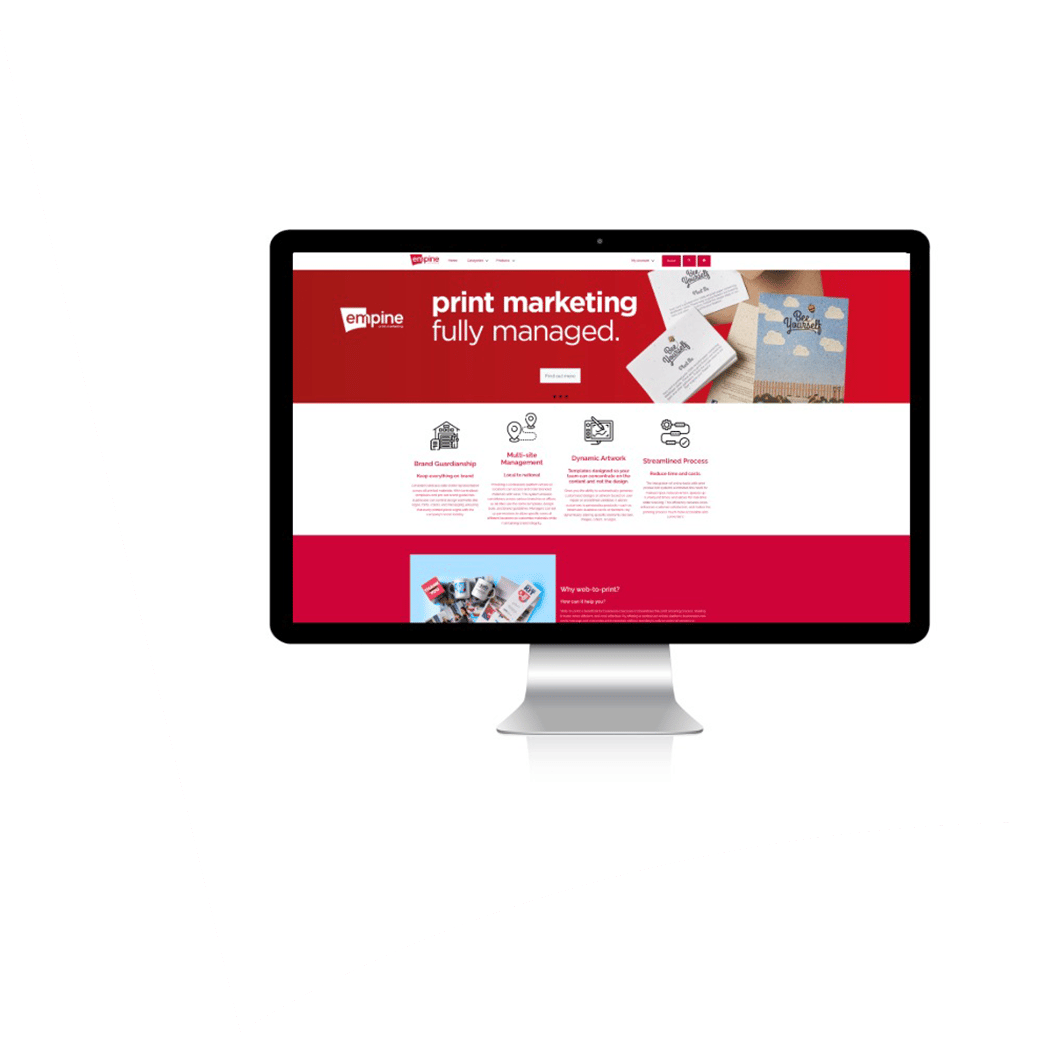
Web2Print

Every organisation uses print somewhere. Print isn’t just marketing; it’s operational, represents the brand in many ways and helps people interact with the business at many different touch points.
Packaging protects products and communicates key information.
Signs guide visitors and staff through spaces.
Stickers and inserts add practical details to shipments.
Brochures explain services and products.
Business cards support everyday introductions.
Over time these materials form an ecosystem of print across the organisation. The challenge is that this ecosystem often develops without a central structure.
Different teams source different materials from different suppliers. Files change over time and orders are placed when something runs out rather than as part of a planned system.
Nothing is necessarily wrong with this approach. It simply means the organisation has limited visibility and control over something that appears in many places every day.
Print management changes that.
Print management is about bringing structure and oversight to the physical print your organisation already uses. Rather than individual items being produced separately, the wider system becomes clearer.
Materials can be organised into categories such as:
Packaging
Environmental signage
Customer-facing materials
Operational stickers and identifiers
Sales and marketing collateral
Once this ecosystem becomes visible, it becomes much easier to manage and having this more organised doesn’t have to mean more work for you.
When organisations begin to manage their print ecosystem more intentionally, a few improvements usually follow.
Printed materials across the organisation feel aligned. Packaging, signage and customer materials reflect the same brand and level of quality.
People know where materials come from and how they are ordered or updated.
Ordering becomes simpler when materials are organised and produced in a more coordinated way.
Essential items are available when they are needed rather than being replaced with temporary alternatives.
Perhaps most importantly, the organisation understands the full range of print it relies on.
Businesses often notice the greatest improvement in areas where print interacts directly with people.
Customer packaging
Visitor and staff environments
Retail and reception spaces
Product information and inserts
Sales and Marketing materials
These are the places where small improvements in clarity, consistency and presentation quickly become visible.
If you want to understand your own print ecosystem, try a simple exercise.
List the types of printed materials your organisation uses.
Packaging
Signage
Stickers and labels
New customer kits
Promotional items
Brochures and leaflets
Business cards
Point-of-sale or display materials
There could be much more because most businesses discover the list grows quickly and in places they didn’t realise.
That list is the foundation of your print ecosystem and once you can see it, you can begin to manage it.
If you would like help bringing structure and consistency to the printed materials across your organisation, we can support the production and supply of everything from packaging to customer-facing print.
Often the biggest step is simply taking control of what already exists.